Delivering your vehicle to a carrier for the first time may feel daunting. I’ve noticed that many customers feel apprehensive because they are unaware of what to expect. In reality, once grasped, delivery windows and their scheduling drivers become easier to accept, the process has its rhythm. If you’re unfamiliar with it all, I’ll highlight the essentials in this guide—standard delivery times, delay factors, and what you can do to accelerate the process.
Car delivery timelines
Transport isn’t a fixed clock. Drivers deal with multiple cars on one route, and each pickup or drop-off can shift the timing for the next. That’s why companies give delivery windows instead of exact hours. Short jobs might take just two or three days. Mid-range trips usually take about a week. Coast-to-coast jobs stretch into a week and sometimes longer. If you’re moving homes, starting a new job, or sending a car to a student, always leave a cushion of time in your plan. Expecting the earliest delivery date without flexibility is the quickest way to stress yourself out.
Shipping time per distance
Short routes in the 200–500 mile range can wrap up within two to three days. Occasionally a driver can load one morning and deliver the next, but that depends on how many cars are on the trailer and how busy the route is. Even simple runs take a little longer when extra stops are involved.
Medium routes of 500–1,500 miles usually take four to six days. Think of runs like Chicago to Dallas or Atlanta to Miami. Trucks rarely haul a single car, so the driver will load several and make staggered deliveries along the way. That adds a bit of time but keeps costs lower. For a clear sense of how distance influences pricing as well as timing, check Car shipping costs.
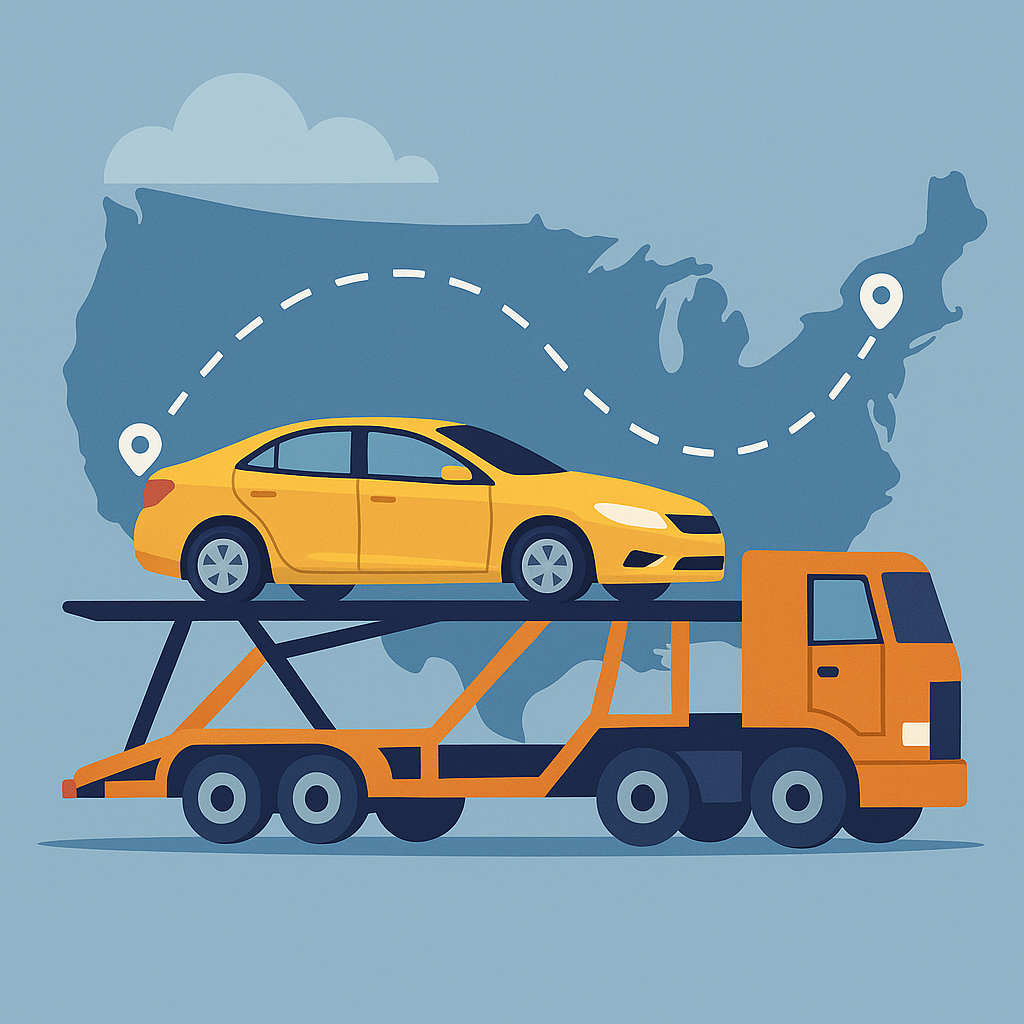
Cross-country hauls of 2,000 miles or more fall into the seven-to-ten-day range. A trip from Los Angeles to New York is a good example. Weather through the mountains or storms along the route can stretch it further, especially in winter.
Factors that affect delivery time
Seasonal demand matters more than people realize. Summer moves and holiday travel pack the schedule. Carriers get more requests than they can handle, so vehicles sometimes sit waiting for placement. Booking early in busy months is the only reliable way to avoid delays at the start.
Location is just as important. A car going from one big city to another will usually move faster because those routes are common. Rural pickups or deliveries take more time. If your home is down a narrow street or in a gated community, the driver may not be able to reach you directly. In that case, you’ll meet nearby in a wide parking lot or along a truck-friendly road. This is normal and keeps things moving.
Traffic and weather can’t be controlled. A snowstorm in the Rockies or heavy congestion outside Los Angeles can push a route back by a day or more. Drivers do their best to plan around it, but these are realities of long-distance hauling. Staying in touch with your driver is the simplest way to keep track of progress.
Speed tips for faster delivery – FAQ
Can I guarantee the fastest delivery?
No. But you can improve your chances by booking early and being flexible with dates. Loads that are ready to go are always more attractive to carriers than last-minute scrambles.
Does paying a little extra help?
Yes. A fair, competitive rate usually gets picked up faster, especially in peak seasons when drivers can choose from many loads. A rock-bottom quote often ends up sitting unassigned.
Is door-to-door quicker than terminal?
Most of the time, yes. With terminal shipping, your car may wait in a yard until enough vehicles fill the trailer. Door-to-door cuts out that wait and usually saves days.
What should I do to avoid slowing things down?
Have the car ready. Clean it, remove personal items, keep the fuel tank under a quarter, and make sure it starts without issue. A vehicle that won’t start delays everyone on the route. For a checklist of what to do before pickup, see Preparing your car.
Does enclosed transport deliver faster?
Sometimes. Enclosed carriers haul fewer cars, so they make fewer stops. But since there are fewer enclosed trailers on the road, availability can be limited, and that sometimes cancels out the time savings.
For first-time shippers, the best advice is to expect ranges, not exact clocks. Booking early, preparing the car properly, and staying flexible will make the experience smoother. Once you’ve gone through it once, the process becomes easier to trust the next time around.